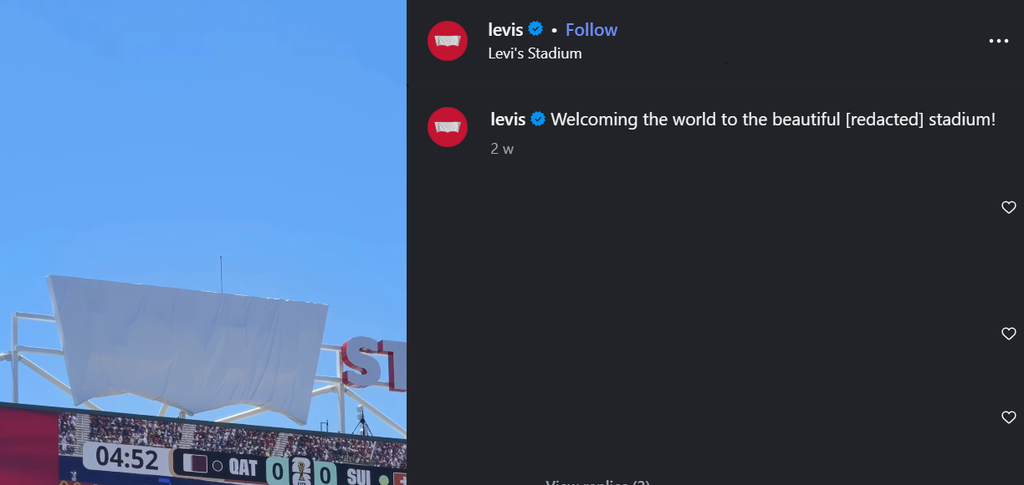
During the current FIFA World Cup, millions of football fans worldwide noticed a bizarre sight at one of America’s premier venues. The massive Levis’ logo had vanished from Levis Stadium, hidden beneath a colossal white tarp.
Imagine spending millions for naming rights, only to have your brand literally be blanked out on the world’s biggest stage. Yet, despite the aggressive censorship, everyone watching still knew exactly where they were.
So, why the heavy censorship during the World Cup? The answer is FIFA’s infamous ‘Clean Stadium’ policy.
Why FIFA Covers Everything
Official FIFA partners, the corporate heavyweights like Adidas, Coca-Cola, and Visa, pay upwards of £100 million per tournament cycle for a single, sacred privilege: absolute exclusivity.
If a brand pays nine figures to be the official beverage or payment processor of the World Cup, they expect to be the only brand anyone sees. To deliver on this promise, FIFA enforces what it formally calls its Clean Stadium Policy.
Essentially, the moment FIFA takes over a venue, they establish a commercially sterile environment. If a brand hasn’t paid tribute to football’s governing body, its assets are treated like commercial contraband or what is called ambush marketing.
What’s Covered
The scope of this cleansing process is staggeringly thorough. FIFA teams sweep through the arena weeks before kickoff, covering, masking, or dismantling anything that might compromise their official partners.
The policy mandates the immediate removal or concealment of:
- Stadium Names: Naming-rights deals are entirely voided. Levis Stadium is stripped of its identity to become the “San Francisco Bay Area Stadium”, while the Mercedes-Benz Stadium is dryly rebranded as the “Atlanta Stadium”.
- Existing Sponsor Logos: Permanent club billboards, stadium partner signs, and local advertising plaques are boarded over or wrapped in neutral colours.
- Concession Branding: Local food stalls, soft drink fountains, and beer taps are systematically stripped of their everyday corporate branding.
- The Micro-Details: The censorship extends to the absolute minutiae. Unofficial branded soap dispensers in the executive suites, logos on stadium monitors, and even condiment dispensers in the media working areas are wrapped in tape or replaced with blank containers.
FIFA is fiercely protective of its broadcast backdrop, going so far as to include this in its ticket sales under Clause 16.2. When billions of eyes are glued to the screen, that background is the most valuable real estate on earth, and FIFA ensures only those who paid for the privilege get to stay in the frame. If you’re not a sponsor, you are going to get erased.
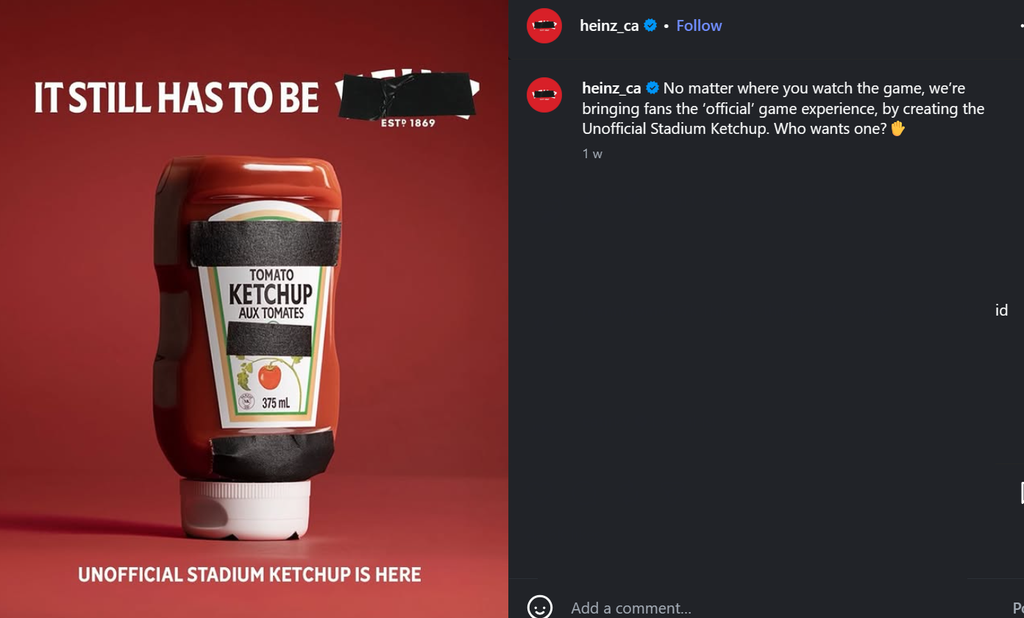
Even the Outside Isn’t Safe
FIFA’s control doesn’t stop at the stadium turnstiles. To completely lock out ambush marketing, they establish “Clean Zones”, an invisible 1km to 2km geographic exclusion radius drawn around the entire venue.
How does this work legally? It’s a masterclass in contractual leverage. When a city bids to host World Cup matches, the local government is required to sign a binding Host City Agreement. This contract legally obligates the local city council to pass temporary, specialised municipal bylaws. These emergency ordinances essentially hand territorial commercial control of public property over to FIFA’s legal teams for the duration of the tournament.
How FIFA Censorship Backfired and Became Free PR
Like you already know, with FIFA’s clean stadium policy, FIFA set out to cover all unsponsored brands, one of which includes Levis Stadium itself.
However, Levis, instead of taking the hit quietly, did something entirely absurd. They also covered their own logo.
Rather than hiding their face in shame, Levis’ marketing team deployed a masterclass in real-time reactive branding:
- The Profile Pivot: They updated their official Instagram profile picture to match the white, canvas-wrapped version of their logo.
- The Troll Post: They posted videos using the viral “Nobody’s gonna know” audio trend, alongside a tongue-in-cheek caption: “Welcoming the world to the beautiful [redacted] stadium!”
- Global Retail Real Estate: They didn’t stop in California. Levis took the “covered logo” concept and applied it to major flagship stores in global hubs like London and Paris, turning a localised tournament restriction into a worldwide brand statement.
Because Levis’ “batwing” silhouette is so structurally iconic, the giant white shape still screamed LEVIS to anyone looking at it. Fans immediately began snapping photos, generating millions of organic impressions and sparking global media coverage.
So, instead of being hidden, Levis successfully turned this into one of the best PR, especially when its kinda free in the world stage.
Did FIFA Retaliate?
So far, the answer is No
There have been no lawsuits, no cease-and-desist letters, and zero public fines levied against Levis.
This isn’t because FIFA lacked the energy. It’s because Levis legal and marketing teams executed a flawless tightrope walk.
What Levis did correctly:
| The Risk | Levis Countermeasure |
|---|---|
| Physical Non-Compliance | Levis didn’t fight the physical cover-up. They allowed the stadium to be renamed. Meaning you can’t sue someone for breaking a rule when they actually obeyed |
| Breaching ‘Clean Zone’ | Levis took their campaign online through global retail stores, which is outside FIFA’s territorial jurisdiction |
| False Endorsement (Passing Off) | Under intellectual property law, ambush marketing crosses into illegal territory when it tricks the consumer into believing a brand is an official partner. Levis never claimed to be associated with the tournament. They simply commented on their own property being covered up. |
Conclusion
In modern business, Levis plan was brilliant, but it was only so because their intellectual property is bulletproof to begin with.
They spent decades legally protecting and building their brand and image. Even with its name covered, the ‘batwing’ silhouette was still recognised. It was this that made their PR stunt successful.
As global sporting events continue to push the boundaries of trademark enforcement and brand protection, businesses should remain mindful of how intellectual property rights operate beyond traditional infringement.
If you have any questions about trademarks, licensing, or protecting your brand, feel free to reach out to the team at Quality Oracle. We’re always happy to help.
Disclaimer: Quality Oracle is an independent IP firm and is not officially affiliated with or endorsed by FIFA, Levi’s, or Heinz. All case studies, brand names, and screenshots are used strictly for educational commentary under fair use guidelines. The views expressed are solely those of the authors.