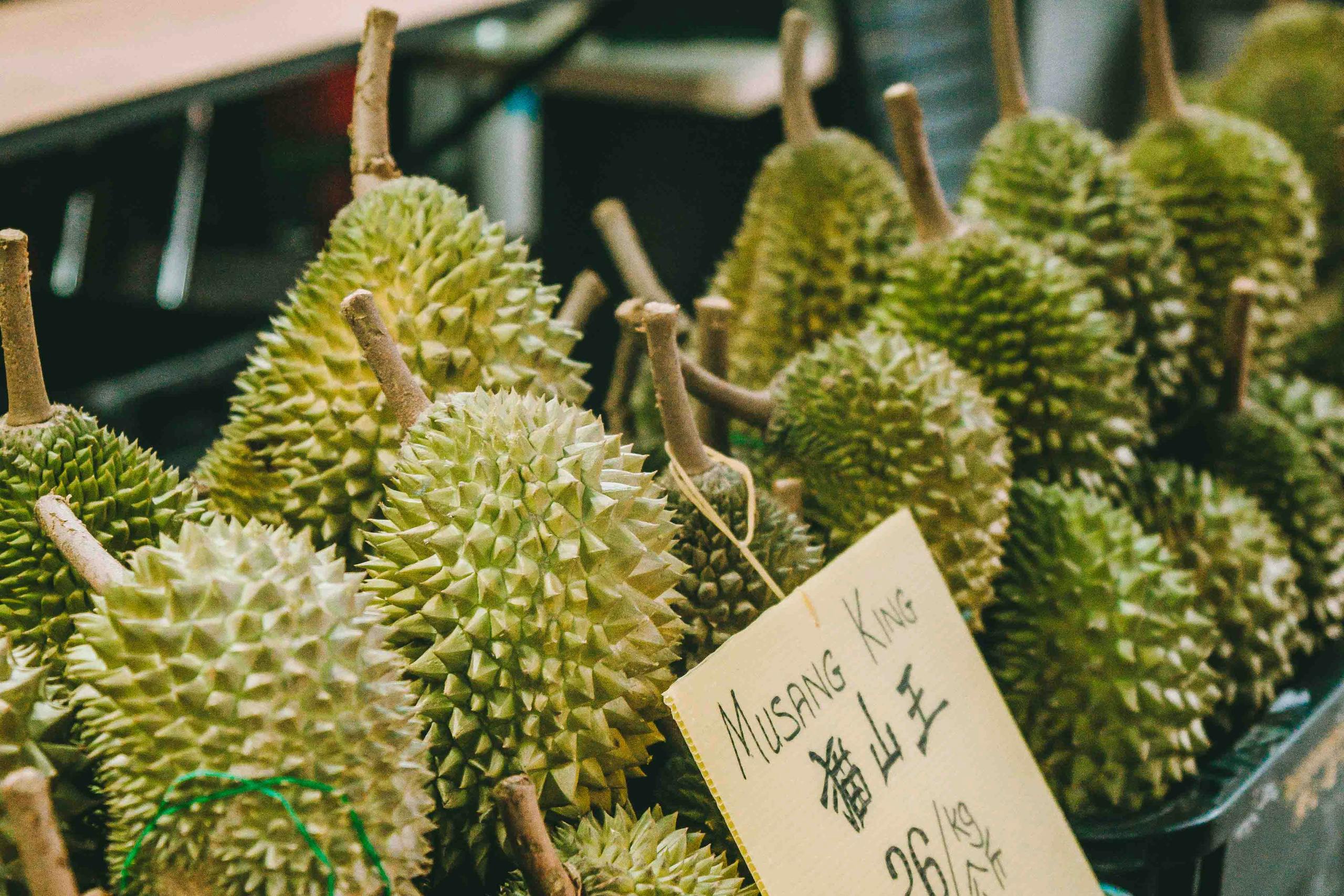
We call it the ‘King of Fruits’, but to Malaysian farmers, it’s just ‘Gold’. With Musang King fetching premium prices in China (up to RM350 per fruit!), competitors in Thailand, Vietnam, and Hainan are now trying to grow their own. So, if a farmer in Vietnam grows a durian tree using a Malaysian seedling, can they sell the fruit as ‘Musang King’?
Thanks to the new Geographical Indications Act 2022, the answer is a firm ‘No’.
What is a Geographical Indication (GI)?
A Trademark protects a brand name.
A Geographical Indication (GI) protects products whose quality, reputation, or characteristics are essentially linked to a specific geographical origin. Unlike trademarks, GI rights belong to eligible producers within the designated region, rather than a single business.
To register a GI, you must prove that the product has a specific quality, reputation, or characteristic that is essentially attributable to its geographical origin. In Malaysia, GI protection is governed by the Geographical Indications Act 2022 and administered by MyIPO.
Well-known registered Malaysian GIs include:
- Sarawak Pepper
- Penang Nutmeg
- Sabah Tea
- Bario Rice
Musang King (Mao Shan Wang) in particular is registered as a GI because the specific soil composition and weather in Malaysia create its unique creamy, bittersweet taste. Grown elsewhere, it’s just not the same.
The Amendment that Shifted the Field
For a long time, Malaysia’s approach to Geographical Indications (GI) was a bit of a “paper tiger.” The old 2000 Act was great for getting your name on a list, but when it came to actually stopping copycats, it lacked bite. It was largely an administrative process with weak enforcement options.
That all changed on 18 March 2022, with the introduction of the Geographical Indications Act 2022. We moved from symbolic recognition to a regime of active protection, giving producers the tools they effectively need to defend their heritage.
Here is what’s different:
- It’s Now a Criminal Offence: This is the biggest game-changer. Previously, misuse was mostly a civil matter (lawsuit territory). Now, it is a crime
- Companies can be fined up to RM15,000 per infringing item.
- Individuals face fines of up to RM10,000 or even 3 years imprisonment.
- Help for the Little Guy: The government knows that small farmers often can’t afford expensive legal battles. The new Act empowers “Competent Authorities” (like the Department of Agriculture) to register GIs on behalf of producers. This ensures that even small farming communities can secure their rights without breaking the bank.
The bottom line is, Malaysia is no longer just “recognising” where products come from; we are actively protecting the value that origin creates.
Examples of Real Life Cases
In September 2025, the Ministry of Domestic Trade (KPDN) brought the first-ever prosecution under the 2022 Act to the Johor Bahru Sessions Court.
The offence, a company, KK Tanom Coffee Sdn Bhd, was charged with selling coffee labelled “KK Tanom”. Changing the spelling from “e” to “a” in the famous Sabah robusta “Tenom Coffee”. The prosecutors argued that although the change is slight, it was still deceptively similar to the registered GI “Tenom Coffee”.
While it is still in court, if convicted, the 1,368 packs of 2-in-1 coffee seized can be fined up to RM15,000 per packet, or the director himself can be fined up to RM10,000 per packet and face 3 years of imprisonment.
Another recent case was the The Harumanis “Test Buy” Operation. The FAMA and KPDN conducted a series of “Test Buys.” They didn’t just look at labels; they bought the fruit to verify its quality and origin. They found scammers who sold fake Harumanis mangoes for RM50 per kg, underselling the actual Harumanis price of RM120 per kg.
Authorities hence issued 61 strict compliance notices and seized non-compliant goods under the Trade Descriptions Act and the GI Act.
Why Malaysian Protection Isn’t Enough
While the 2022 Act has given our GIs teeth inside Malaysia, there is a catch: The law stops at the border.
A common misconception among business owners is that registering a GI in Malaysia automatically protects it worldwide. It does not. IP rights are territorial. A “Musang King” registration in Kuala Lumpur has no legal power in Beijing, Tokyo, or Singapore.
Now, farmers in Hainan, China, have successfully harvested their first batches of durian using imported seedlings and techniques. Without valid GI protection in China, there is little to stop a farmer in Hainan from growing a durian variant and legally selling it as “Musang King” or “Mao Shan Wang” to the domestic Chinese market.
If “Musang King” becomes a generic term for a type of durian rather than a durian from Malaysia, our farmers lose the premium status they worked decades to build. We risk competing on price against local Chinese producers, rather than on origin.
So What Can Malaysia Do?
Malaysia’s government can take inspiration from the EU-China Agreement on Geographical Indications. It’s basically a treaty between countries that provides mutual recognition and protection, where China agreed to legally protect European products like Champagne, Feta Cheese, and Parma Ham. For instance, sparkling wine made in China cannot be called Champagne.
The Bottom Line
The rules have changed. At home, the 2022 Act has given GIs actual power. Abroad, the race is on to secure our heritage before competitors in Hainan or Vietnam claim it as their own.
Origin is no longer just a marketing story; it is a valuable legal asset. Whether you are a local producer or a global exporter.
Don’t let your heritage become someone else’s generic product. Whether you are protecting a local coffee brand or exporting the King of Fruits, Quality Oracle is here to navigate the complex world of domestic and international GI protection.