Intro
Its 2026, and Malaysians are in an uproar snagging tickets for the Formula 1 Gulf Air Bahrian Grand Prix that is going to be held in Sepang, Malaysia, marking the return of Formula 1 since 2017. Formula 1 teams spend millions of dollars each season engineering the fastest, most aerodynamically complex cars on the planet, you would think they would also be willing to spend a little more to protect their designs using patents. However, if you examine every carbon-fibre fin, bargeboard, and diffuser across the grid, you will never spot a “Patent” stamp.
Whether in Silicon Valley or Cyberjaya, pioneering breakthroughs trigger an immediate race to the patent office. In Formula 1, filing a patent is competitive suicide. The sport does not protect its intellectual property through government registries; it survives on an extreme culture of trade secrecy, tactical paranoia, and fierce regulatory battles.
Why F1 Don’t Use Patents For Their Tech
F1 teams intentionally avoid the traditional patent system for three practical reasons:
- Public Disclosure Issue
- Delays in Registration
- FIA Regulatory Ban
Public Disclosure Issue
Since most of the F1 teams is located in the UK’s Motorsport Valley, we discuss the following laws for Intellectual Property based on UK’s law.
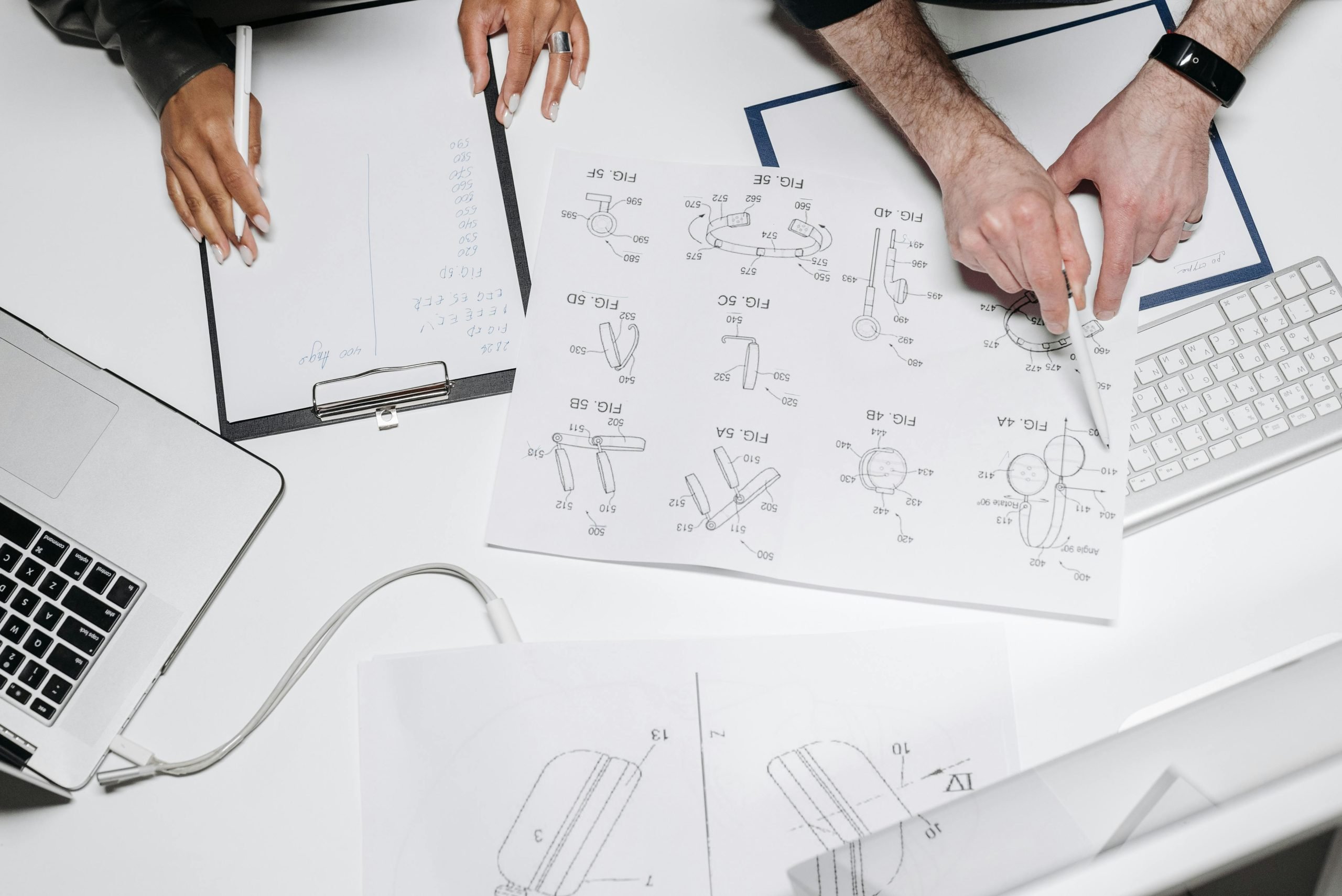
A basic rule of patents are that there must be a public disclosure of the blueprints. While this itself is not expressly stated, it is implied through several Sections within the Patents Act 1977.
- Section 1(1) sets out general requirements, including inventive step and industrial applicability, which require disclosure of the invention to satisfy these criteria.
- Section 14(3) and the Manual of Patent Practice clarify that a patent specification must include a full description of the invention, including any necessary drawings or schematics sufficient for a person skilled in the art to carry it out.
Patent protection is a legal bargain. The state grants a temporary monopoly in exchange for full, public disclosure of how the invention works. In F1, submitting engineering blueprints to a public register gives nine rival engineering departments a free, detailed roadmap to duplicate the underlying physics.
Delays in Registration
Following the official guidance from the UK Intellectual Property Office, applying for a patent takes about 2-4 years. Just completing a search request by the UKIPO typically completes the search within about 6 months, and publication is around the 18-month mark from the filing date.
In F1, an aerodynamic package evolves from race to race, with updates fabricated in two to four weeks. Major regulatory resets occur every few seasons. By the time a patent examiner reviews an application, the car in question has already been retired to a museum.
FIA Regulatory Ban
The Fédération Internationale de l’Automobile (FIA) enforces rules in Formula One (F1) to maintain competitive balance and safety. Over the decades, innovations that provide teams with excessive advantage or pose safety risks have been banned. Examples include:
- Mercedes DAS System, where adjusting front wheel toe dynamically, while initially legal in 2020, was banned the year after due to the unfair performance edge it conferred.
- Tyrrell X-Wings and Traction Control, which were outlawed for safety and competitive balance reasons
Hence, highly innovative technologies are allowed only until they threaten the sport’s fairness or exceed regulatory limits, after which the FIA effectively neutralises them, regardless of who invented them.
Hence, even excluding the reasons above, an exclusive patent provides zero competitive advantage.
What They Use Instead
Rather than relying on statutory patent laws, Formula 1 teams lean entirely on trade secret frameworks, information barriers, and strict physical security.
Teams would install tall partition screens in front of garages whenever a car is serviced, and mechanics routinely form human walls to shield exposed machinery from pit-lane telephoto lenses.
However, this is not foolproof. For instance, when track recovery cranes hoisted Sergio Pérez’s crashed Red Bull high above the circuit at the 2023 Monaco Grand Prix, photographers captured detailed angles of the car’s complex floor strakes and venturi tunnels. Within hours, competing aerodynamicists possessed millions of dollars’ worth of underfloor ground-effect R&D that Red Bull had spent months concealing.
Another method of protecting the IP is through what some people may call the “Gardening Leave”. The most critical IP resides in the minds of aerodynamicists and software engineers. Since the knowledge can’t be deleted from memory, senior technical directors are bound by strict non-compete clauses. They are mandated to go on “Gardening Leave”, spending 6 to 12 months on paid hiatus before they can begin working for a rival.
Exception
Does this mean Formula 1 teams completely ignore patent offices? Not quite. Teams do file patents, just not for on-track competition.
While patenting an aerodynamic floor or front wing is tactical suicide on a circuit, teams aggressively patent cross-over technologies through their commercial spin-off divisions (such as Williams Advanced Engineering, McLaren Applied, or Red Bull Advanced Technologies). When an innovation has utility beyond motorsport, the math changes:
Outside the paddock, inventions are not outlawed by an FIA technical directive after six months. Technologies like advanced battery management systems, carbon-composite manufacturing techniques, and flywheel energy-recovery systems have a decade-long commercial lifespan in consumer vehicles, aerospace, and public transport.
Williams, for instance, patented aerodynamic winglet technology originally designed for race cars to redirect cold air inside supermarket open-front refrigerators, drastically cutting energy consumption across UK grocery chains.
Hence, if an engineering breakthrough only shaves two-tenths of a second off a lap time, it stays a fiercely guarded trade secret. But if it can be licensed, scaled, and monetised across mainstream commercial industry, teams will dial their patent attorneys immediately.
What Happens When Their Tech Was Stolen
However, trade secrecy can still fail, and the consequences reverberate across the sport’s history.
1. Spygate (2007) – Outright Industrial Espionage
Nigel Stepney, a disgruntled Ferrari engineer, smuggled a 780-page dossier containing confidential Ferrari blueprints, weight distributions, and test data to McLaren’s chief designer, Mike Coughlan. The operation collapsed when Coughlan’s wife brought the dossier to an ordinary copy shop in Surrey, England, where an alert shop worker notified Ferrari. The FIA handed McLaren a record $100 million fine and stripped the team of all 2007 Constructors’ Championship points.
2. The “Pink Mercedes” (2020) – Reverse Engineering
Racing Point unveiled the RP20, a machine strikingly identical to Mercedes’ 2019 title-winning W10. The team claimed they had legally reverse-engineered the bodywork using thousands of high-resolution race photographs. However, following a protest by Renault, the FIA determined Racing Point had used proprietary Mercedes CAD drawings for their rear brake ducts, a component designated as a “Listed Part” that each constructor must design independently. Racing Point was penalized 15 championship points, fined €400,000, and the FIA subsequently banned 3D scanning cameras and photogrammetry techniques designed to clone competitor surfaces.
Conclusion
Because Formula 1 moves at such a blinding pace, a 20-year patent grant is an eternity. Teams cannot afford to wait on bureaucracy, so they protect multi-million-dollar engineering advantages through a tactical trifecta:
- Physical and digital lockdown: Garage partitions, mechanic “human walls,” and segmented CAD servers to starve telephoto lenses and data leaks.
- Contractual containment: Aggressive non-competes and mandatory gardening leave to stop human IP from walking straight into a rival’s wind tunnel.
- Relentless development velocity: Iterating at such speed that by the time competitors finish reverse-engineering an aerodynamic concept, the original design has already been replaced by a faster upgrade.
In an arena where tech expires in a matter of weeks, legal filings take a back seat. The real moat isn’t paperwork; it’s how fast you can innovate, deploy, and keep your trade secrets locked down before anyone else catches up.
Enjoyed This Deep Dive?
From pit-lane engineering secrets to global trademark wars and the hidden legal battles behind everyday brands, we decode the IP shaping the world. Check out our other newsletter editions for more stories and insights over at Quality Oracle.