If you passed by a Swatch boutique on May 16th, you probably thought a war had broken out.
We are talking about massive, block-long overnight queues in London, New York, Paris and even in Malaysia. In some cities, mall operators completely panicked and shut their doors before opening. In others, police had to deploy pepper spray and tear gas just to control the crowds.
The internet went into absolute meltdown, and people even got physical with each other. Speculators and resellers started flipping a $400 watch on eBay and Chrono24 for over $1,500.
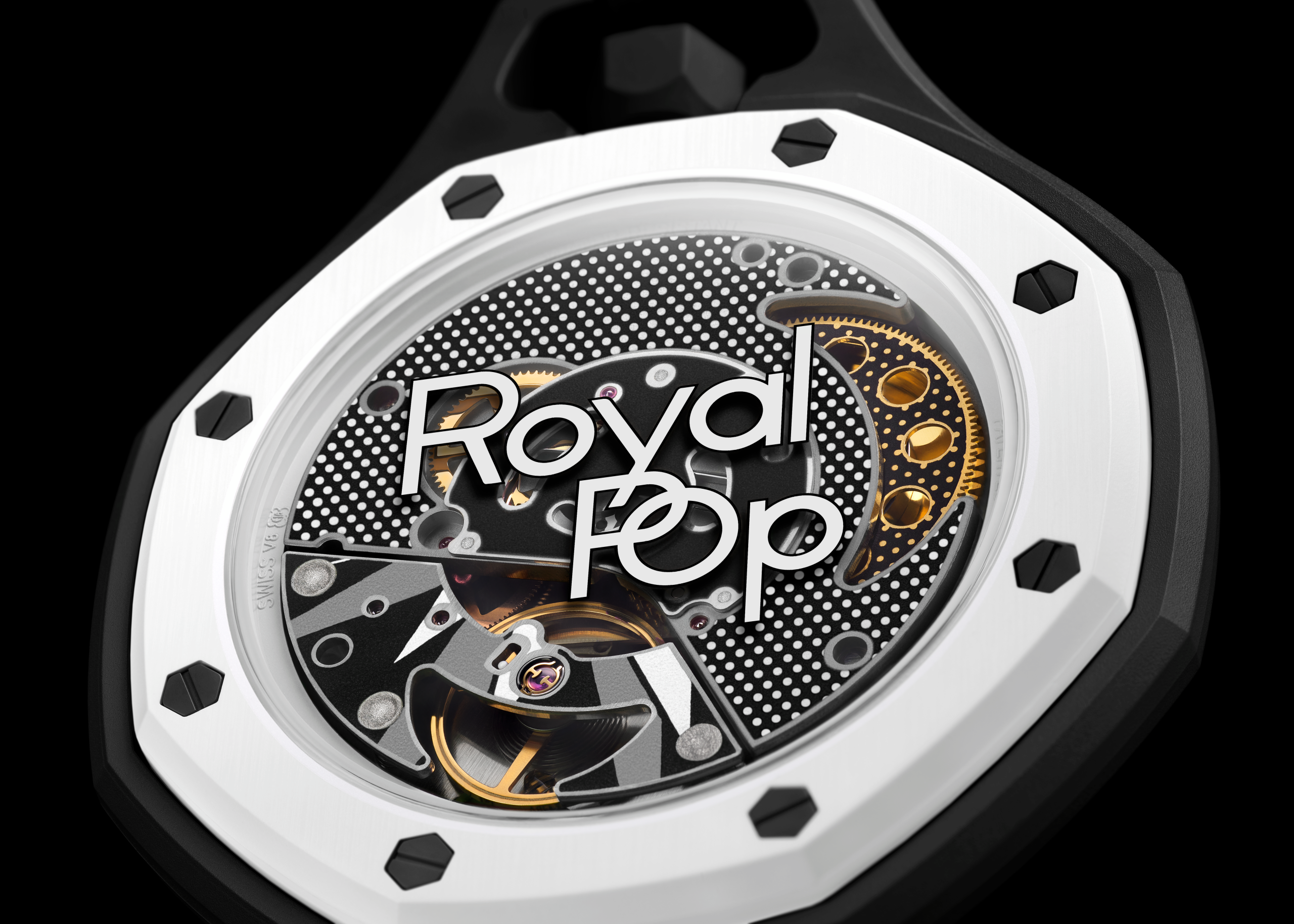
But here is the kicker: the watch that caused all this madness? It’s not even a wristwatch. It’s a plastic pocket watch.
This piece explores how Audemars Piguet, one of the most prestigious names in watchmaking, lost its claim to the trademark of its signature watch design and strategically countered by saturating the market with an accessible plastic version to deter competition.
THE BILLION DOLLAR OCTAGON
To understand the chaos, you have to look at Audemars Piguet. They are one of the most exclusive watchmakers on earth, making just 50,000 ultra-luxury watches a year. Their holy grail is the Royal Oak, a steel masterpiece with a distinct octagonal bezel and a price tag that easily hits six figures.
Because that octagonal shape is a literal money-printing machine, AP’s legal team tried to lock it down forever by trademarking the physical 3D shape of the watch (known in law as a three-dimensional product configuration/trade dress).
Why a trademark? Unlike design protection, a trademark over a shape can last indefinitely. As long as it is renewed every ten years and continues to function as a source identifier, it never truly expires. By contrast, design patents are time-limited, typically lasting between 15 to 25 years before falling into the public domain, depending on the jurisdiction. Once that happens, competitors are free to replicate the design.
For Audemars Piguet, securing trademark protection over its watch shape would have meant more than just brand recognition, it would have created a perpetual legal monopoly over that geometry. No competitor could lawfully reproduce the same form, effectively cementing AP as the sole manufacturer of that distinctive design indefinitely.
So, AP went to court to lock down the design, but they started facing problems.
What Happened in the Courtroom
Over the last two years, global courts systematically dismantled AP’s legal shield
In Japan
In March 2024, Audemars Piguet lost its appeal before the Japan IP High Court to register the Royal Oak’s full 3D shape as a trademark. The Court held that the design lacked inherent distinctiveness, as each element (the octagonal bezel, hexagonal screws, and tapisserie dial) served functional or commonly used purposes and could be assessed individually rather than as a unique whole.
AP also failed to prove acquired distinctiveness. Although it presented strong sales and advertising figures, the evidence was undermined by product variations (e.g. different Royal Oak lines), making it impossible to show that the claimed shape alone had gained recognition as a source identifier.
In the United States
In January 2025, Audemars Piguet lost its trade dress appeal before the US TTAB for the Royal Oak’s 3D configuration. The Board held that key design elements were functional and rejected AP’s argument that the watch constituted a single “unitary” mark, noting inconsistencies with its prior filings.
AP also failed to prove distinctiveness. Its extensive marketing evidence backfired, as advertisements consistently featured prominent word marks, such as adding AP in their advertisement, leading the Board to conclude that consumers rely on branding rather than shape. Additionally, the absence of “look-for” advertising meant AP had not sufficiently educated consumers to recognise the design itself as a source identifier.
The Common Factor in Both
One of the ultimate factors that cemented their fact is that AP failed to submit any objective consumer survey evidence.
To establish that a 3D product shape functions as a trademark, the legal standard requires empirical proof that, even without logos or branding, consumers can identify the product’s source based on shape alone.
Instead, AP relied on sales figures and visually appealing marketing materials. Without rigorous consumer research showing that the public associates the bare design with AP, their claim to trademark protection could not be sustained.
THE PIVOT
AP realised that if they couldn’t stop people from buying cheap octagonal watches with lawsuits, they had to beat them in the free market. Hence, they teamed up with mass-manufacturer Swatch to release the “Royal Pop.”
The watch features the Royal Oak’s exact contested signatures (the octagonal bezel, the eight hexagonal screws, and the tapisserie dial. But instead of hand-finished white gold, it’s made of Swatch’s signature colourful bioceramic plastic.
It is a modular, pop-art pocket watch inspired by Swatch’s 1980s POP line. You can pop the watch head completely out of its case frame and wear it on a calfskin lanyard around your neck, clip it as a bag charm, or swap it into different bright desk stands.
The Benefits
By releasing an official, affordable version of their own design, AP pulled off a brilliant legal counter-strategy.

By attaching the “Audemars Piguet” name directly to the octagonal bezel across 200 Swatch stores, millions of social media posts, and a global resale frenzy, they are manufacturing the exact acquired distinctiveness the courts said they lacked. If they ever walk back into a courtroom in five years, they now have the ultimate mass-consumer association data to prove the octagon means AP. Moreover, why buy a counterfeit when you can get the real deal for the same price?
THE BOTTOM LINE
Audemars Piguet didn’t cheapen its brand for fun. They did it because their legal strategy collapsed. For our team at Quality Oracle, this stands as the ultimate case study in modern IP survival: taking a devastating courtroom defeat, pairing it with a plastic pop-art pocket watch, and transforming it into the wild, riot-inducing marketing masterstroke of 2026.
In the modern market, a beautiful design isn’t enough, you need an unshakeable legal framework to defend it. Whether you are launching an iconic product shape or expanding a global brand footprint, a flawed filing strategy can cost you your market exclusivity.
Contact Quality Oracle today for robust 3D trademark registration, international trade dress protection, and strategic IP portfolio management. Let our team of specialists turn your creative innovations into permanent legal assets.
FAQ
Note: The information provided in this newsletter is for general informational and educational purposes only and does not constitute formal legal advice from Quality Oracle.